Piedmont Orthopedic Spine Surgery
Surgeries we Perform
ALIF - Anterior lumbar interbody fusion

Anterior lumbar interbody fusion (ALIF) is a surgical procedure in which the lumbar spine is approached from the front (through the abdomen) to remove a damaged disc and insert a spacer type of implant between two vertebrae to restore height and alignment. Over time, the bones fuse together, stabilizing the spine and reducing pain caused by conditions such as degenerative disc disease or instability.
ACDF - Anterior cervical discectomy and fusion
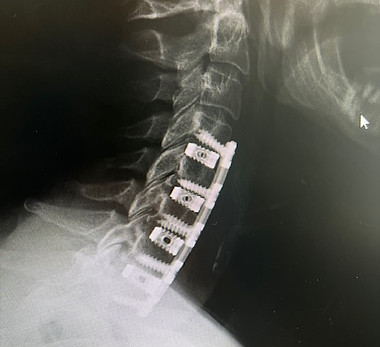
Anterior cervical discectomy and fusion (ACDF) is a surgical procedure in which a surgeon approaches the cervical spine (neck) from the front to remove one or more damaged or herniated discs that are compressing the spinal cord or nerves. A bone graft or implant is then placed in the disc space and covered with a plate and screws, allowing the vertebrae to fuse together over time to stabilize the spine and relieve pain, numbness, or weakness.
Cervical Disc Arthroplasty
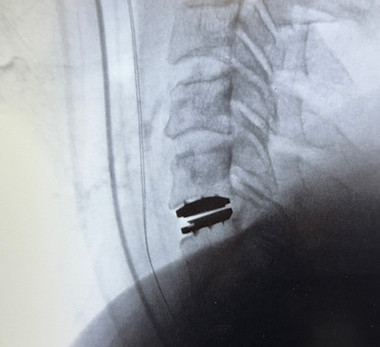
Cervical disc arthroplasty (artificial disc replacement) is a surgical procedure in which a damaged cervical disc is removed and replaced with a motion-preserving artificial disc. Unlike fusion, it maintains movement at the treated level while relieving nerve or spinal cord compression that causes neck pain, arm pain, numbness, or weakness.
Kyphoplasty

Kyphoplasty is a minimally invasive procedure used to treat painful vertebral compression fractures, often caused by osteoporosis. A small balloon is inserted into the collapsed vertebra to restore height, and medical cement is then injected to stabilize the bone and reduce pain.
Lumbar fusion / TLIF / DLIF / XLIF
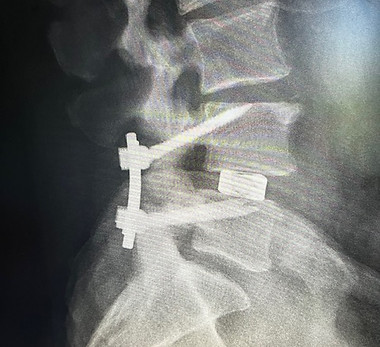
Transforaminal lumbar interbody fusion (TLIF) is a type of lumbar fusion performed through a posterior (back) approach, where the surgeon removes a damaged disc and places a bone graft or implant into the disc space from one side of the spine to restore height and stabilize the segment.
Direct lateral interbody fusion (DLIF) is a minimally invasive lumbar fusion performed through the patient’s side, allowing the surgeon to remove the disc and insert an implant without working directly through the back muscles, often reducing muscle disruption and blood loss
Spinal Cord Stimulator

A spinal cord stimulator (SCS) is an implantable device that delivers mild electrical pulses to the spinal cord to interfere with pain signals before they reach the brain. It is typically used for chronic nerve-related pain, such as failed back surgery syndrome or complex regional pain syndrome, when conservative treatments have not provided relief.
Laminoplasty

Laminoplasty is a surgical procedure used to relieve pressure on the spinal cord in the cervical (neck) spine without permanently removing the lamina. During the procedure, the surgeon “reconstructs” or repositions the lamina like a door hinge to expand the spinal canal, creating more space for the spinal cord while preserving motion and spinal stability, often used for multilevel cervical spinal stenosis.
Cervical laminectomy and fusion

Cervical laminectomy and fusion is a surgical procedure performed to relieve pressure on the spinal cord or nerve roots in the neck, often caused by spinal stenosis, herniated discs, or bone spurs. During the procedure, the surgeon removes the lamina—the bony arch covering the back of the spinal canal—to decompress the nerves. After decompression, the affected vertebrae are stabilized by placing a bone graft and sometimes metal screws and rods, allowing the vertebrae to fuse together over time. This fusion helps maintain spinal stability, prevent abnormal movement, and reduce pain, weakness, or numbness caused by nerve compression.
Interlaminar Stabilization - Coflex

Interlaminar stabilization (Coflex) is a minimally invasive spine procedure used to treat lumbar spinal stenosis. After surgical decompression (removing pressure from the spinal nerves), a small titanium implant called the Coflex device is placed between the spinous processes of the affected vertebrae. The implant helps maintain stability while preserving natural motion, reducing the need for spinal fusion and supporting continued flexibility in the lower back.
Microdiscectomy

A discectomy is a surgical procedure in which a portion or all of a herniated or damaged intervertebral disc is removed to relieve pressure on nearby nerves or the spinal cord. It is commonly performed in the cervical or lumbar spine to reduce pain, numbness, or weakness caused by nerve compression, and can be done through minimally invasive techniques or traditional open surgery.
Laminectomy

A laminectomy is a surgical procedure in which the lamina—the bony arch on the back of a vertebra—is removed to enlarge the spinal canal and relieve pressure on the spinal cord or nerve roots. It is commonly used to treat spinal stenosis, herniated discs, or bone spurs, helping to reduce pain, numbness, or weakness while sometimes being combined with spinal fusion for added stability.
Scoliosis/Adult Deformity Reconstruction

Scoliosis reconstruction is a surgical procedure designed to correct abnormal curvature of the spine and stabilize it, typically in patients with severe or progressive scoliosis. The surgery often involves placing rods, screws, and bone grafts along the spine to straighten the curve, promote fusion of the vertebrae, and maintain long-term spinal alignment while reducing pain and preventing further deformity.